What Is ANSI A300 Pruning — And Why It Matters for Your Trees
ANSI A300 is the American national standard for tree pruning — the baseline ISA-certified arborists follow. Here's what it actually requires, and why most 'landscaper pruning' violates it.
Quick Answer
Quick Answer
ANSI A300 is the American National Standards Institute's standard for professional tree pruning. It defines proper cut placement (at the branch collar, never flush), pruning types (crown cleaning, thinning, reduction, raising), and limits (no more than 25% of live canopy removed per year). Following ANSI A300 extends tree life and prevents decay; violating it — topping, flush cuts, lion-tailing — permanently damages trees.
- Max canopy / year
- 25%
- Correct cut
- At branch collar
- Never allowed
- Topping
- Industry body
- ANSI + ISA
What ANSI A300 actually is
ANSI A300 is the American National Standards Institute's set of standards for tree care operations — specifically, Part 1 covers pruning. It's the professional baseline that ISA (International Society of Arboriculture) certified arborists follow nationwide.
It covers four things: where to make cuts, how to make them, how much to remove, and how to document the scope. It sounds boring. It's actually the difference between a tree that lives 60 more years and a tree that's dead in 15.
The branch collar rule (the one most non-arborists violate)
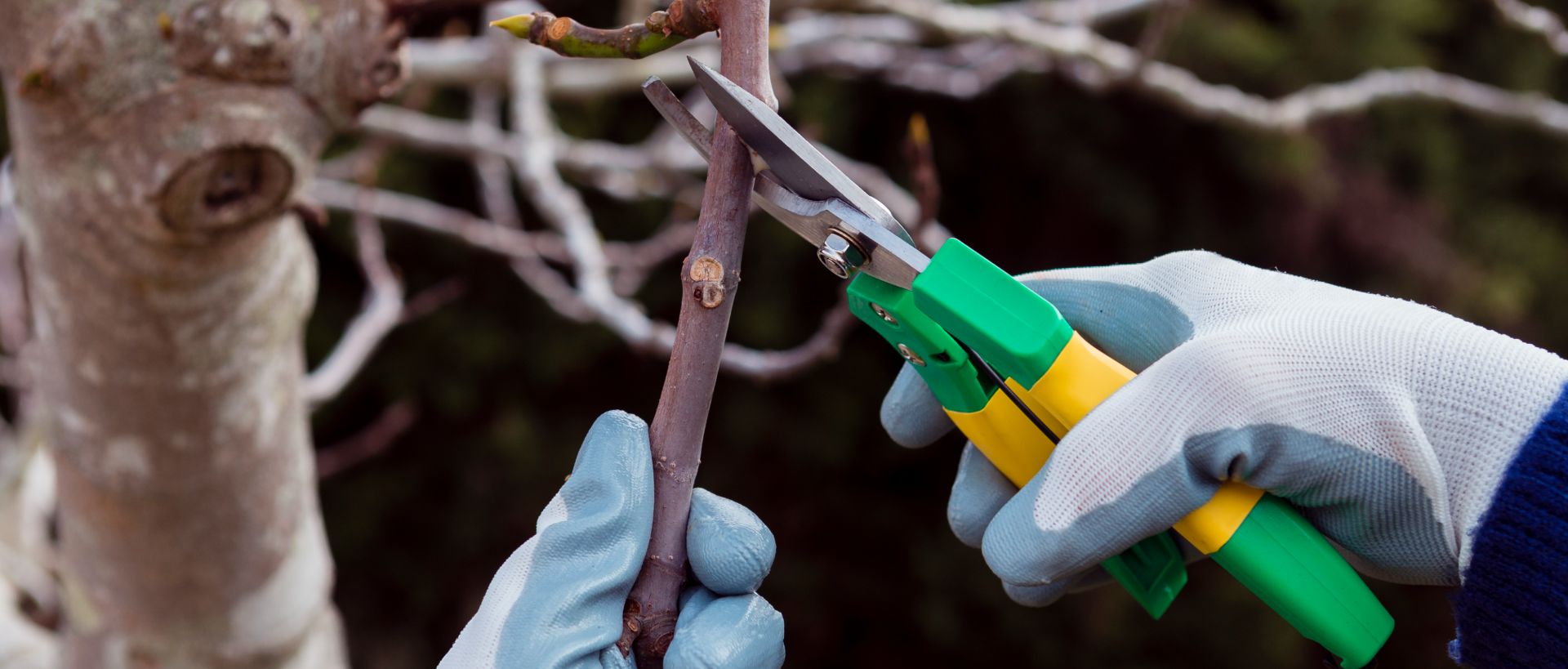
Every branch meets the trunk at a slight swelling — the branch collar. It contains specialized cells the tree uses to seal off the cut after pruning. A proper ANSI A300 cut is made just outside the branch collar, preserving it intact so the tree can compartmentalize the wound.
A flush cut — slicing the branch off flush with the trunk — removes the branch collar. The tree cannot seal the wound. Decay fungi enter the exposed wood. Over 10–15 years, the damage spreads into the trunk. That's how a single bad pruning visit shortens a tree's lifespan by decades.
This is the single most common violation we see on trees in Worcester County. When a 'tree guy' with a chainsaw prunes in 20 minutes per tree and leaves flush cuts, he has permanently compromised every tree he touched.
The 25% rule
ANSI A300 says: no more than 25% of a tree's live canopy should be removed in a single pruning season. Exceed that limit and the tree responds with defensive growth — water sprouts (fast-growing weakly-attached shoots) and epicormic sprouts along the trunk.
Those sprouts aren't the tree healing. They're the tree panicking. They create weak-branch unions, irregular form, and often worse storm-risk structure than the tree had before pruning. When you see a tree covered in vertical sprouts after being 'trimmed,' that's a 25%-rule violation.
Topping is not pruning
Topping — cutting main scaffold branches or the central leader back to stubs — is explicitly prohibited by ANSI A300. It is the most destructive practice in modern tree care. And it's still done every day, by homeowners who want a tree 'shorter' and by contractors who don't know better.
Topped trees don't get shorter permanently. They respond with vigorous vertical regrowth — the water sprouts again — and within 5 years the tree is taller than it was, with weaker attachments and an irregular form. Meanwhile, every cut stub becomes a decay entry point.
The correct way to reduce a tree's size is crown reduction: cutting back to lateral branches large enough to take over the terminal role. It's slower, more skilled, and more expensive than topping. It also works.
How to verify a company follows ANSI A300
Ask three questions. One: 'Are your climbers ISA-certified, or do you follow ANSI A300?' A hesitation or a 'we know what we're doing' answer is the wrong answer. Two: 'Will you be making cuts at the branch collar, not flush cuts?' If the person doesn't know what a branch collar is, move on. Three: 'How much of the canopy do you plan to remove?' If the answer exceeds 25%, ask why and whether it can be staged over two seasons.
Pro Evolution Tree Service follows ANSI A300 on every pruning job. Our quotes specify the pruning type (cleaning, thinning, reduction, raising) so you know exactly what you're getting — and what you're not.
Keep Reading
Related Guides
Pricing
How Much Does Tree Removal Cost in Massachusetts? (2026 Guide)
Tree removal in Massachusetts runs $450–$3,500+ per tree, with most jobs falling between $750 and $1,800. Here's what drives the range, when to bundle, and how to get a fair quote.

Tree Health
When to Remove a Tree vs. Save It: 7 Signs You Shouldn't Ignore
Not every sick-looking tree needs to come down. Here are seven specific warning signs that push a tree from 'save it' to 'remove it' — and how to tell the difference.