Does Homeowner's Insurance Cover Tree Removal in Massachusetts?
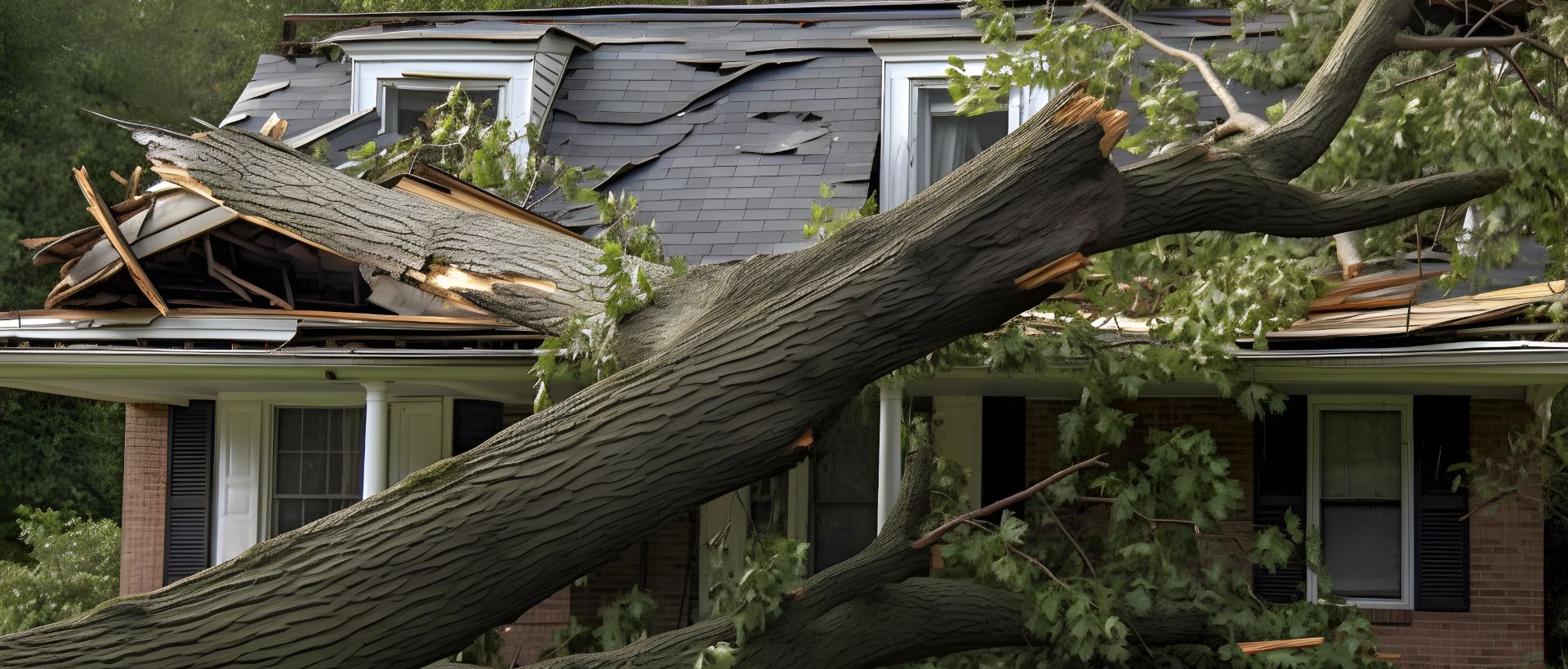
Homeowner's insurance covers tree removal when — and only when — a tree has actually fallen on a structure or blocks essential access. Here's exactly when it applies and how to document a claim.
Quick Answer
Quick Answer
Massachusetts homeowner's insurance typically covers tree removal only when a tree has actually fallen on an insured structure (house, garage, shed, fence) or physically blocks the driveway. Standing hazardous trees, dead trees, and preventive removal are not covered, regardless of how dangerous they look. Typical coverage limits for tree removal are $500 to $5,000.
- Covered
- Fallen trees on structures
- Not covered
- Standing hazards
- Typical limit
- $500 – $5,000
- Document
- Photos + itemized scope
The simple rule: fallen, not standing
Massachusetts homeowner's insurance operates on a straightforward principle: policies respond to damage, not to risk. If a tree falls on your house, your policy responds. If the same tree is leaning 30° toward your house but is still standing, the policy does nothing until it falls.
This is frustrating for homeowners with hazardous trees. The tree is obviously dangerous, premiums are paid every year, but the insurer won't touch the cost of removal until after something expensive breaks. That's not a loophole — it's how property insurance is designed. It's a response mechanism, not a prevention mechanism.
What insurance typically covers
Tree on a house, garage, shed, or fence: covered under dwelling coverage, typically. The insurer pays for removal of the tree plus repair of the damaged structure. Coverage limits for the tree removal portion are usually $500 – $5,000 per event, set in the policy schedule.
Tree blocking driveway or entrance: covered when the tree creates an access problem to an insured structure. Most Massachusetts policies include this as part of dwelling coverage.
Tree across a power line into your house: covered, though the utility company usually handles the line-side removal, and your insurance handles the house-side.
What insurance typically does not cover
Removal of a standing dead or dying tree, no matter how hazardous. Not covered. If it falls, then yes — but you can't claim against the risk itself.
Preventive removal of a tree that a professional arborist deems a hazard. Not covered. Even with a signed arborist report, insurance will not pay to prevent the loss.
Tree removal from your yard that didn't hit anything. If a tree falls in your yard but doesn't strike a structure or block access, most policies don't cover removal.
Damage from tree roots (e.g., to a sewer line or foundation). Often explicitly excluded as 'gradual damage.'
How to properly document an insurance claim
When a tree hits your property, document immediately. Take photos from multiple angles before anyone touches the tree. Include context shots (the full house + tree) and close-ups (the impact point and any structural damage). Video is even better.
Next, get a professional itemized estimate. Not a verbal number — a written document listing: labor to remove the tree, equipment, debris haul, repair estimate for any damaged structure, and a narrative describing what the crew did. Insurance adjusters compare line items across quotes; verbal estimates slow claims down or get denied.
Finally, have the tree-removal company's insurance documentation (Certificate of Insurance) available. Some insurers reject unsatisfied-claim submissions when the contractor wasn't insured — even if the damage itself was covered.
The real financial logic: prevention vs. claim
Here's the calculation insurers don't explain: a preventive tree removal on a hazardous oak might cost $1,500 out-of-pocket. If that oak falls on your roof, the claim could cost $15,000 — of which your insurer pays most, but your deductible ($1,000 – $2,500) plus premium increases for 3 years often match or exceed the preventive cost.
Preventive removal is almost always the rational move when the risk is real. Get an arborist to document the tree's condition in writing. If it's a genuine hazard, remove it now at your cost rather than hoping it holds until the insurer pays.
Pro Evolution Tree Service provides documented hazard assessments as part of every quote, and can speak directly with your insurance adjuster on claims arising from storm events. We handle emergency dispatch and the documentation needed for clean claim resolution.
Keep Reading
Related Guides
Pricing
How Much Does Tree Removal Cost in Massachusetts? (2026 Guide)
Tree removal in Massachusetts runs $450–$3,500+ per tree, with most jobs falling between $750 and $1,800. Here's what drives the range, when to bundle, and how to get a fair quote.

Tree Health
When to Remove a Tree vs. Save It: 7 Signs You Shouldn't Ignore
Not every sick-looking tree needs to come down. Here are seven specific warning signs that push a tree from 'save it' to 'remove it' — and how to tell the difference.